Wednesday, November 17, 2010

Muhammadi Mosque, Kota Bharu

The Muhammadi Mosque in Kota Bharu is the state mosque of Kelantan Darul Naim and has been used on several occasions for the main celebrations in the Islamic calendar. It is a significant landmark in the town which features graceful arches and golden coloured domens.

The mosque was originally built in 1867 from premium wood during the reign of Sultan Muhammad II. The renovation works to transform the then wooden building to the present concrete building was made in 1922 and was officially opened on Friday the 31st July 1931 by His Royal Highness Sultan Ismail and named Muhammadi Mosque.

Numerous further extensions and renovations were made in 1959, 1968, 1976 and 1987, enabling it to accommodate the present 2400 devotees at any one prayer session.

During the 1860s to 1960s, the mosque was also the centre for religion teachings. Among the famous scholars that had once taught here were Hj Abd Rahman Arab, Hj Wan Abdullah, Hj Che Samat, Hj Nik Wan Daud, Hj Wan Muhammad Gagah, Sheikh Daud Al-Fatoni and the well known Tok Kenali.

Monday, November 15, 2010

Kota Bharu Independence Field

Independence Field (Padang Merdeka) in Kota Bharu is a historic site and has witnessed many major events. It was here that the corpse of Tok Janggut Pahlawan Kelantan who fought the British was hung upside down in 1915. It was here too that the declaration of the country's independence from British was made on 31 August 1957.

The area was once the site of Kota Bharu's "Floating Market" before Sultan Muhammad II built the Grand Palace which faces the field in 1844. The area was then known as Padang Kelupang.

It was renamed Padang Bank in 1906 when Sultan Muhammad IV built a bank, Bank Pitis as depository for the coins that were produced at a mint within the palace grounds. The bank still stands near the entrance of the Grand Palace.

The field acquired its present name in 1957. Some of the Great War artifacts such as anti aircraft gun and mast are erected at this site.

On the four corners of the obelisk, are bronze plaques written in English, Arabic, Chinese and Tamil as a memorial to those who went to Kelantan and lost their lives in the Great War (1914-1918)

Sunday, November 14, 2010

Batu Palace, Kota Bharu

Batu Palace was created a royal museum in a grand ceremony by the Sultan of Kelantan in July 1991. From architecture point of view, there is nothing impressive but the palace is coated with the royal golden paint which signify its status.

It was originally built in 1939 during the reign of Sultan Ismail Ibni AlMarhum Sultan Muhammad IV as a wedding gift to Sultan Yahya Petra and his bride, Raja Perempuan Zainab II.

The palace was the official residence of Sultan Yahya Petra while he was Tengku Mahkota, or heir to the thrones, until 1960, when he ascended the throne and move to his new home in Istana Kota Lama.

Batu Palace was then renovated and became the official residence of Tengku Salwani Binte Sultan Yahya Petra in 1966. She lived there until 1969. Thereafter it became the official residence of Tengku Ismail Petra, who was Tengku Mahkota, until 1972.

Batu Palace is now converted to Royal Museum. Entrance fee is RM 1 for adult and RM 0.50 for children (Saturday to Thursday, 0830- 1645, Closed on Friday).

I did not venture into the museum but I manage to get a snapshot of what to expect inside the museum. From what I gathered, the museum displays royal belongings, pictures and dishware.

Friday, November 12, 2010

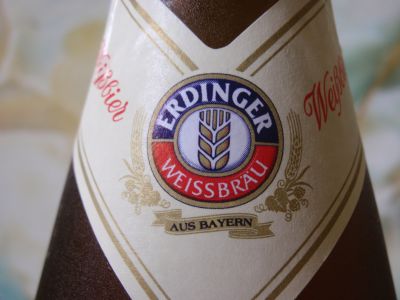
Erdinger Hefe Weissbier

After tasting the Erdinger Dunkel, it's time for me to taste its Hefe Weissbier version. It is available from local store at RM 19.29, which again in my opinion is a bit expensive.

The Hefe version is of unfiltered wheat beer which gives it a cloudy appearance than the normal filtered malt beer.

Erdinger Hefe Weissbier is made from water, wheat malt, barley malt, hops and yeast. It has an alcohol slightly higher than the normal malt beer at 5.3%

It pours to a very nice yellow and cloudy appearance with quite a head which disappear quickly.

The beer did not impress me much but it is a cool refreshing beer to have during a hot day. I could taste a some vanilla, a little spice & yeast and a little hint of citrus in the medium. It leaves a sweet doughy aftertaste

For a German wheat beer enthusiast like myself, Erdinger might not be the first choice as there are better one out there.

Wednesday, November 10, 2010

Pitis Bank

Pitis Bank is located in front of the Kota Bharu Istana Besar and opposite the Kelantan Royal Regalia Museum. As the name implies, the building was first used as a state treasury during the reign of Sultan Muhammad III (1889-1890). Pitis was the old currency of the state.

In 1906, Kelantan began to produce its own currency called "pitis". Made from tin, the "pitis" was circular with a hole in the middle.

The Bank Pitis was utilized as a strong room to keep the state treasury and important documents belonging to the Kelantan government at the time.

Apart from "pitis", the other currencies used in Kelantan from the 16th to 19th century are the "kijang" coin, the "sun dinar" and gold coins with Arabic inscriptions on both sides.

In 1909 the production of Kelatanese coins ceased when British started producing coins for the straits settlement. The Bank Pitis no longer functional, as the first trading bank of Kelantan, the Mercentile Bank of India Ltd (Bank Kerapu) was set up in 1912.

Monday, November 8, 2010

Jahar Palace

Jahar Palace has been a museum of the regal customs of Kelantan since July 1992. It takes the name from the Jahar tree that grows in the palace grounds.

The palace was built in 1887 during the reign of Sultan Muhammad II as a gift to Long Kundur, who was Raja Bendahara and third in line to the throne. It was known as Raja Bendahara Palace. Long Kundur succeeded Sultan Muhammad II in 1889 and became Sultan Muhammad III

Jahar palace was a royal residence during the reign of Sultan Muhammad III and several other sultans.

The Panca Persada (The Royal Platform) acts as a place where a prince or princess would be cleansed and given a royal bath before being married or circumcised for a prince. It was built within the palace compound, not far away from a well for easy supply of water. It was made of wood structured in hexagon shape of three levels, with steps leading to the upper level where the royal bathing ceremony would take place.

The royal boat is an instrumental transportation when the sultan need to travel by rivers. It has a maximum capacity of 10 person and is made of chengal wood with bronze carving decoration.

Wakaf is an ancient rest stop for travelers. It was built by the villagers and the wakaf is considered a public facility back then. It is originated from Kampung Pak Badol, Pasir Puteh and is said to be more than 100 years old. It is built with 3 tier roofs, 2 tier floors and 8 supporting poles. The roof is decorated with duck's breast to amplify its architecture beauty.

Photograph is not allowed in the museum and I took one for the team by showcasing its interior. The museum displays a collection of fabrics and royal's traditional ceremony.

Also not to be missed is the Weapon Gallery beside the museum which showcases ancient malay weapons such as keris, axe, spear, machete and etc.

There are also quite a collection of antics outside the palace such as this Fiat car which probably used by the sultans once.

If I remember correctly from the photos inside the museum, this is actually a gift from the subjects to the sultan to celebrate the prince circumcision ceremony

Sunday, November 7, 2010

Sticky Hand Made Rock Candy

Recently I came across an interesting outlet while shopping in One Utama Shopping Complex in Bandar Utama when I saw a large crowd gather outside the stall.

On closer inspection, the outlet with the name of Sticky produce hand made rock candy.

I did some research and found out, Sticky began its operation from Sydney, Australia and then opened a branch in Singapore and Malaysia. In the latest news I gathered, there will be opening another outlet in Pavilion KL soon.

The process of making the candy is done in a transparent partition where member of the public can actually see and observed the complete process of making the candy.

The end result is pretty amazing and highly intricate designs. They can even custom made the candy design if they were request by the customers

All the rock candies which are packaged in jars and cute plastic packaging. A perfect gift for weddings, family members and loved ones.

The best place to start is to purchase a mix rock candy which has a bit of every flavours and designs. The small jar will cost RM16.90 while the bigger jar will cost RM19.90. I strongly recommend the bigger jar as they are hardly any significant difference between the jar size.

There are all sorts of flavours inside it, watermelon, kiwi, grapes, orange, lemon, strawberry, passion fruit and etc. They are pretty cute and I'm sure a lot of people would love them.