Monday, November 12, 2012
Kolam Display 2012 @ Berjaya Times Square
Berjaya Times Square has a knack of creating a huge kolam annually and this year they engage a renowed kolam specialist, Mohan Maruthamuthu to set up an interesting display.
The kolam here is about 936 sq ft. The Rangoli kolam is created using loopy swirls and unconventional patterns with colour tones that have been carefully blended. This design was completed by Mohan in just 13 hours without any chalk sketches.
The kolam uses an exquisite display of flamboyant colours and is decorated with coconut husks, flowers and rice flour to enhance the effect of the impressive and intricate design.
Saturday, November 10, 2012
Kolam Display 2012 @ Pavilion KL
Peacocks seems to be chosen as the theme for the kolam display in almost every major shopping mall in KL this year. Pavilion KL, in my opinion, by far has set up the most beautiful kolam in the Klang Valley.
A gigantic striking kolam called "The Rising Mayur" welcomes visitors to the mall at the main entrance.
The colourful kolam with hues of green, crimson, royal blue and yellow measures 676 sq ft and is made of 586kg of hand dyed crushed rice with a little touch of spices and dried avarampoo.
The peacock is a symbol of integrity, immortality and royalty. The mayur possesses some of the most admired human characteristics, inspiring us to better ourselves and live harmoniously in the multi cultural society of Malaysia.
This year, Pavilion has collaborate with Raffles College of Higher Learning to inject fresh ideas into their creative decor
A gigantic striking kolam called "The Rising Mayur" welcomes visitors to the mall at the main entrance.
The colourful kolam with hues of green, crimson, royal blue and yellow measures 676 sq ft and is made of 586kg of hand dyed crushed rice with a little touch of spices and dried avarampoo.
The peacock is a symbol of integrity, immortality and royalty. The mayur possesses some of the most admired human characteristics, inspiring us to better ourselves and live harmoniously in the multi cultural society of Malaysia.
This year, Pavilion has collaborate with Raffles College of Higher Learning to inject fresh ideas into their creative decor
Thursday, November 8, 2012
Telekom Museum
Telekom Museum located at Jalan Raja Chulan and Jalan Gereja in KL is a place to be if one is interested in the nation's past history in telecommunication industry.
The history of this building begun in 1928 when it was built to accommodate the manual telephone exchange of central battery. The building is designed in the form of G and a corridor bordered in with a Courtyard. The building is characterized by Greek architecture.
Like the colonial era buildings, the building height of two floors masonry is built according to weight and structure. In the 1960s, the building was used as Headquarters of Telekom for Selangor Region. In April 1985, this building has been gazetted as one of historic building in Malaysia.
Entrance to the museum is free. The exhibition hall is located on the 1st floor of the building.
Visitor will have a chance to walk down memory lane and view the old phone models available since its inception in this country.
The Bukit Nanas tower was built to allow the introduction of a microwave radio system. The tower which is about 400 feet high was a symbol of the nation's development. The microwave system at Bukit Nanas was linked to the whole country.
The tower on Bukit Nanas was started in 1958 and completed the following year. On 13 February 1960, Malaysia's first Prime Minister officially inaugurated the tower which was sometimes referred to as Kuala Lumpur's "Eiffel Tower". It was an important landmark in the capital.
The beginning of the use of Morse Code which begun in Perak is well depicted here.
Communication equipment onboard vessel. Notice how bulky the equipment were before they became obsolete.
The country's first telephone directory came out in 1937. It was less than half an inch thick and it contained only the telephone numbers of government bodies and commercial firms. At that time the exchanges were manually operated and some of the subscribers had single digit numbers.
Nowadays the telephone directory would be more than a foot thick but for the fact that it is divided up with separate volumes for different states.
The Telekom technicians played essential part in the smooth operation of Malaysia telecommunication system. This picture show technicians terminating a new cable carrying 1,200 pairs of wire on the Main Distribution Frame (MDF) equipment.
This diorama depicts a typical scenario of a telephonist assistance centre. The telephonist on the left is seems working on cordless switchboard.
The last part of the museum on the 2nd floor highlights the latest achievement in telecommunication technology in this country.
The history of this building begun in 1928 when it was built to accommodate the manual telephone exchange of central battery. The building is designed in the form of G and a corridor bordered in with a Courtyard. The building is characterized by Greek architecture.
Like the colonial era buildings, the building height of two floors masonry is built according to weight and structure. In the 1960s, the building was used as Headquarters of Telekom for Selangor Region. In April 1985, this building has been gazetted as one of historic building in Malaysia.
Entrance to the museum is free. The exhibition hall is located on the 1st floor of the building.
Visitor will have a chance to walk down memory lane and view the old phone models available since its inception in this country.
The Bukit Nanas tower was built to allow the introduction of a microwave radio system. The tower which is about 400 feet high was a symbol of the nation's development. The microwave system at Bukit Nanas was linked to the whole country.
The tower on Bukit Nanas was started in 1958 and completed the following year. On 13 February 1960, Malaysia's first Prime Minister officially inaugurated the tower which was sometimes referred to as Kuala Lumpur's "Eiffel Tower". It was an important landmark in the capital.
The beginning of the use of Morse Code which begun in Perak is well depicted here.
Communication equipment onboard vessel. Notice how bulky the equipment were before they became obsolete.
The country's first telephone directory came out in 1937. It was less than half an inch thick and it contained only the telephone numbers of government bodies and commercial firms. At that time the exchanges were manually operated and some of the subscribers had single digit numbers.
Nowadays the telephone directory would be more than a foot thick but for the fact that it is divided up with separate volumes for different states.
The Telekom technicians played essential part in the smooth operation of Malaysia telecommunication system. This picture show technicians terminating a new cable carrying 1,200 pairs of wire on the Main Distribution Frame (MDF) equipment.
This diorama depicts a typical scenario of a telephonist assistance centre. The telephonist on the left is seems working on cordless switchboard.
The last part of the museum on the 2nd floor highlights the latest achievement in telecommunication technology in this country.
Thursday, November 1, 2012
Lumut Town
Lumut is a coastal town in the State of Perak, about 84km from Ipoh and 4 hours drive from Putrajaya.
This once fishing village has since become the home base for the Royal Malaysian Navy and the gateway to Pangkor Island.
Lumut is a peaceful town and due to the large presence of the Navy, it is said if one left the car key outside, the car will still remains there after a few days.
This anchor serves as a symbol of declaration of the town as naval town on 24th April 2009 in conjuction with the 81st birthday celebration of the ruler of Perak and The Royal Malaysian Navy's Diamond Jubilee. This anchor is from KD Rahmat which was in service for 32 years until it was decommissioned on 19 December 2003. The symbol of declaration signifies The Royal Malaysian Navy as the catalyst towards the development of Lumut Town.
The main attraction here would be the Lumut Waterfront which without a shadow of a doubt is one of the best seaside promenade in this country.
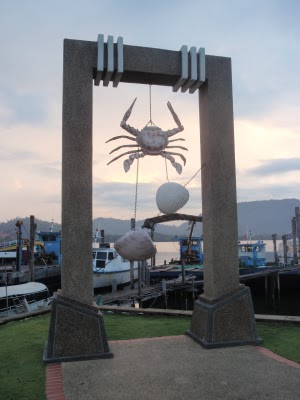
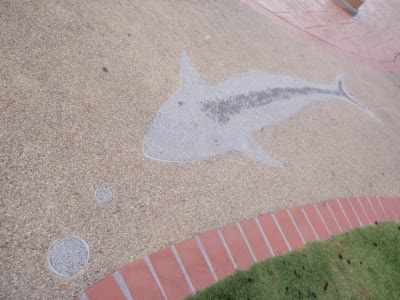
The waterfront has a few spacious squares and many marine sculptures which make it a perfect venue to unwind in the evening or during the weekend.
Labels:
Lumut
Location:
100, 32200 Lumut, Perak, Malaysia
Subscribe to:
Posts (Atom)